All articles
Power Steering Seals
Power Steering Seals — Stop the Leak Before the Pump Fails
28 April 20255 min read
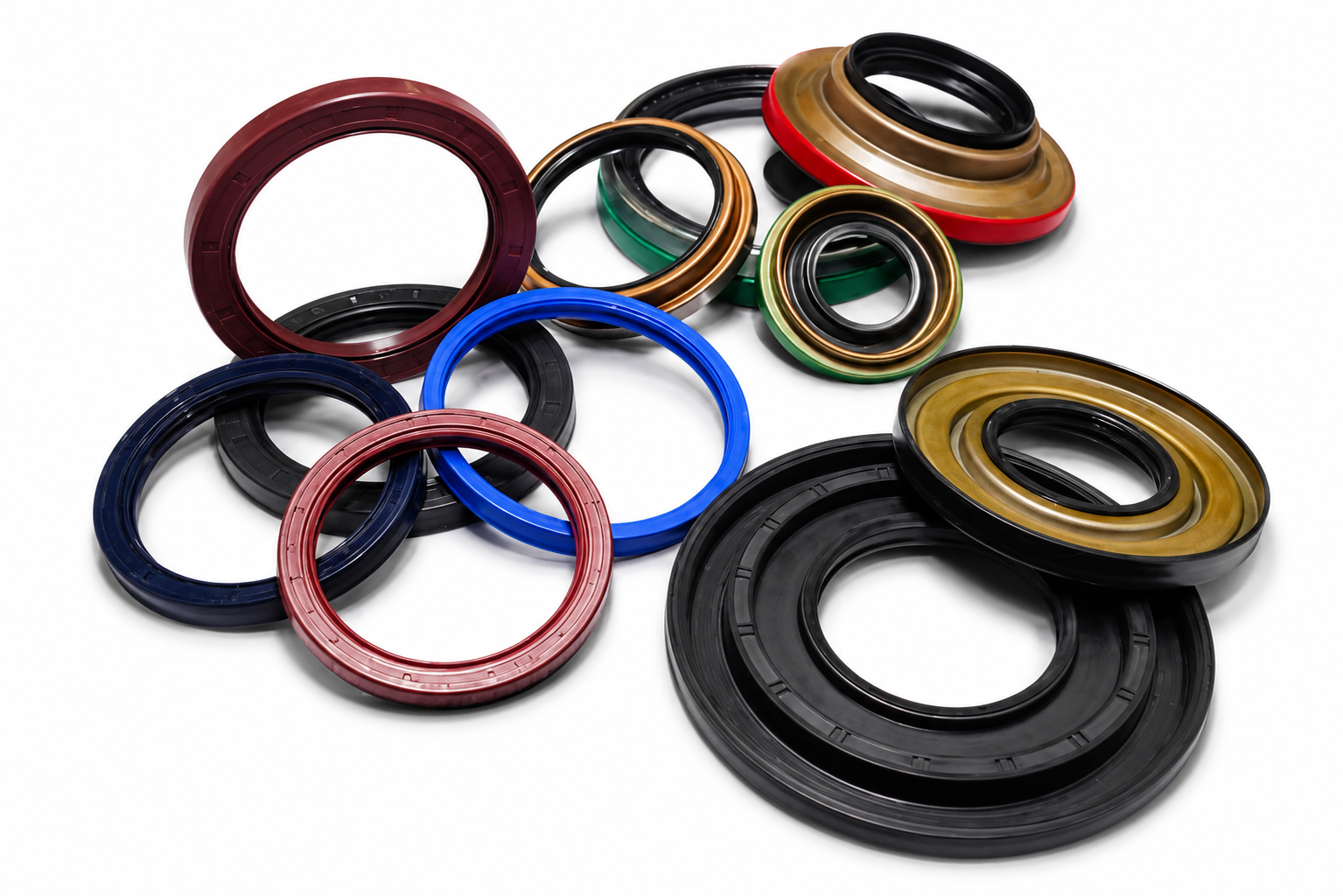
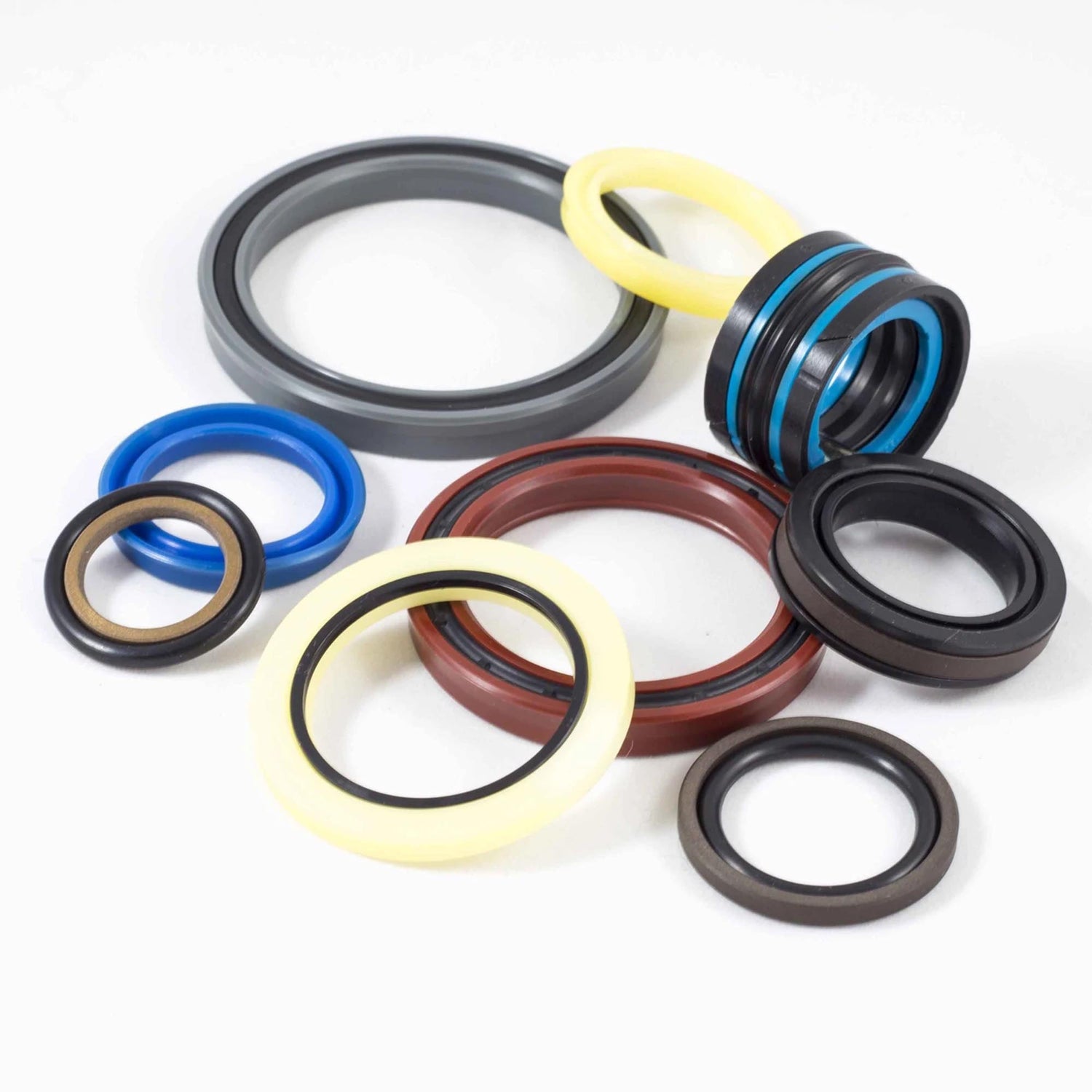
Power steering systems run at high pressure with hot, thin fluid — exactly the conditions that punish rubber seals. A small leak today turns into a noisy pump, hard steering and a much bigger repair bill tomorrow.
Common uses
- 1Sealing pinion and input shafts on hydraulic steering racks
- 2Pump shaft seals on belt-driven power steering pumps
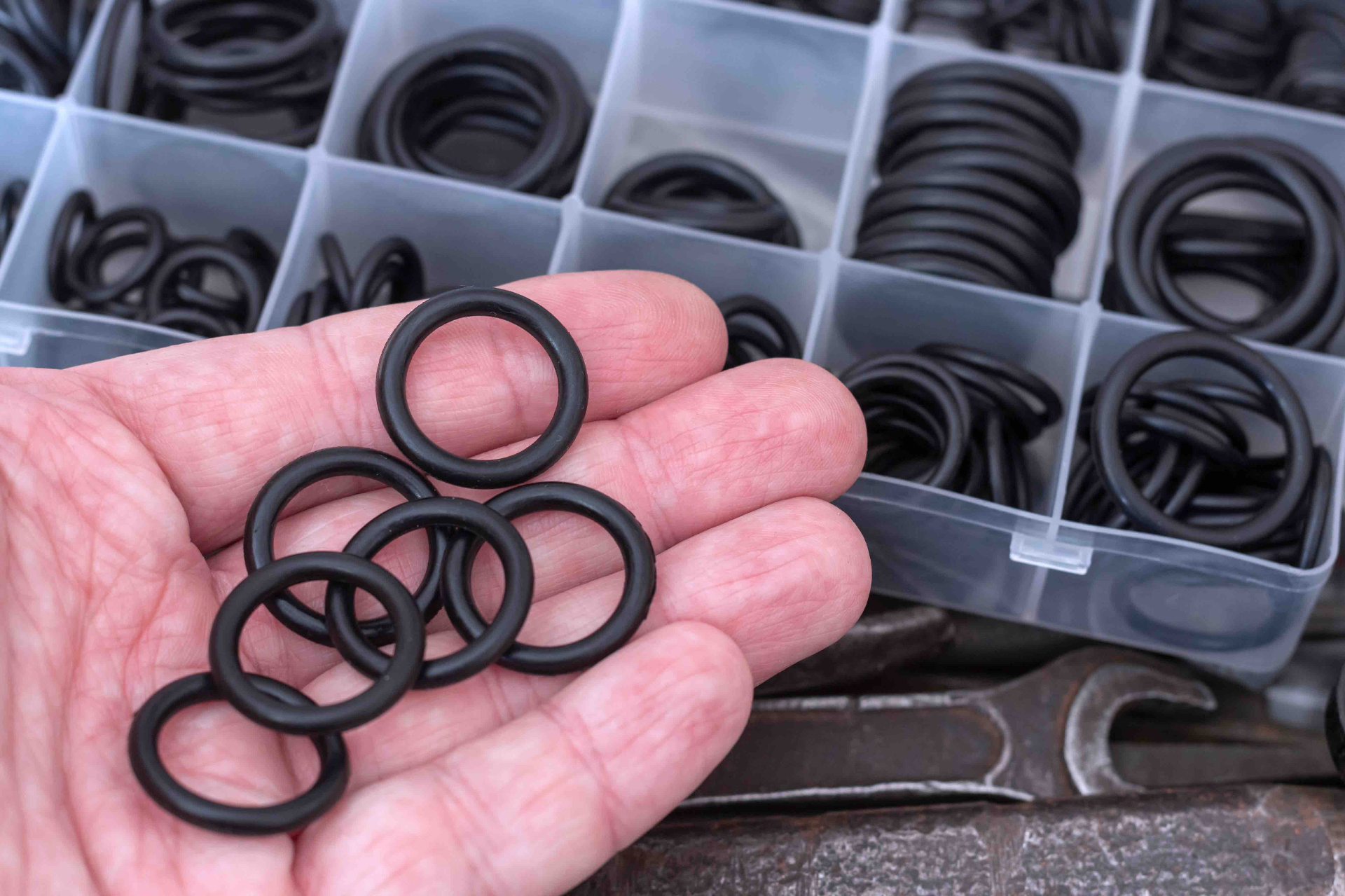
- 3O-rings on high-pressure feed and return line fittings
- 4Internal piston and rod seals inside the rack assembly
Advantages
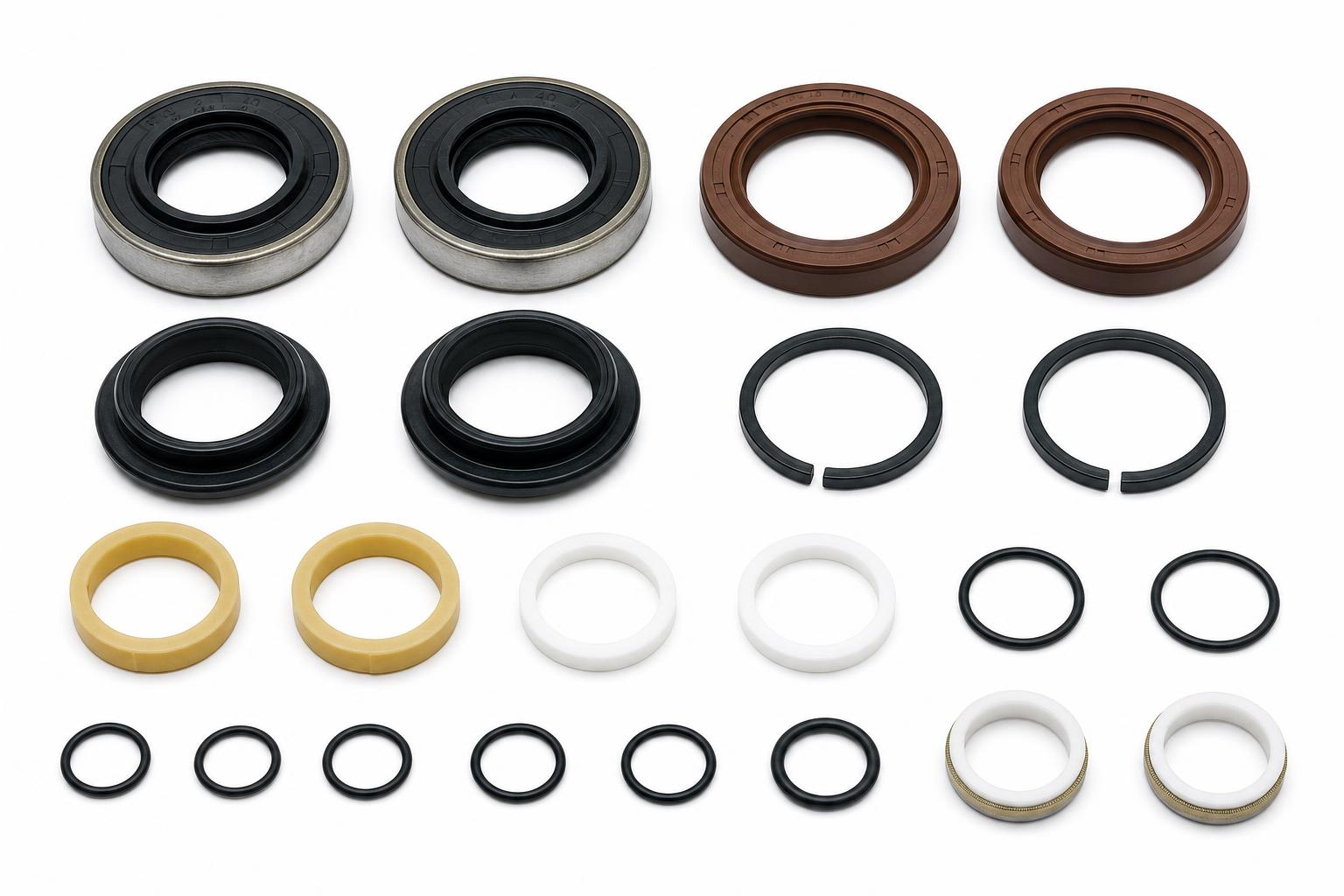
- Available as complete rebuild kits — every seal needed in one box
- Far cheaper than replacing the rack or pump as a complete unit
- FKM (Viton) options handle synthetic ATF and high temperatures
- Common sizes covered for most car, SUV, truck and 4x4 makes
Disadvantages
- Replacement is labour-intensive — racks usually come off the car
- Wrong compound fails fast — power steering fluid attacks NBR over time
- A scored shaft or pitted bore will leak even with new seals
- Air must be properly bled afterwards or the pump will whine and fail
The bottom line
Never ignore a power steering leak — low fluid kills the pump within days of running dry. Always rebuild with a complete kit, fit the correct compound, and bleed the system fully before handing the car back.
Need power steering seals in Dubai?
Send us the size, brand or part number — we'll respond with stock and best price in minutes.