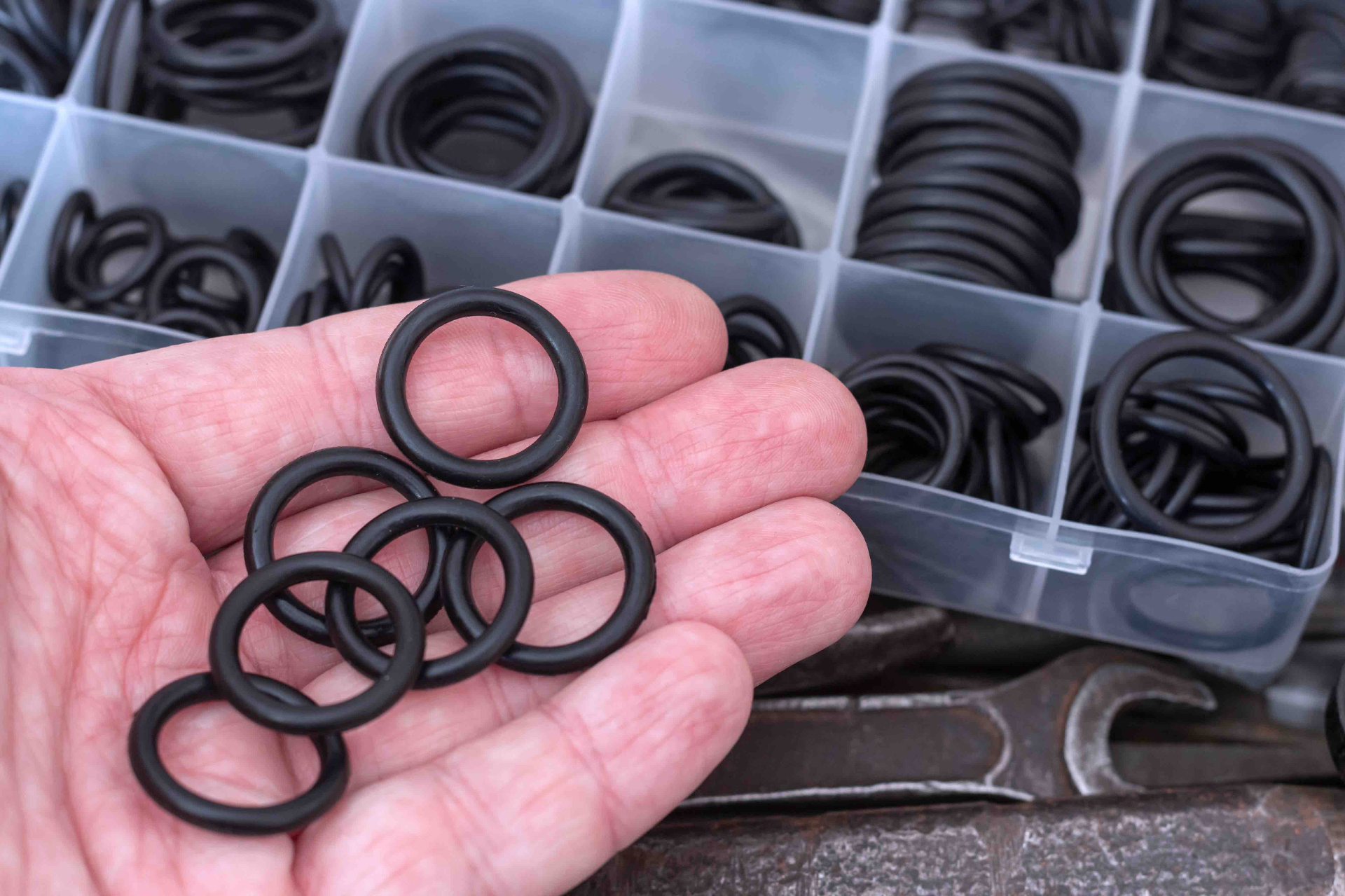
An O-ring is a simple rubber loop, but it's quietly the most-used sealing element in modern vehicles and industrial plants. Squeezed between two surfaces, it deforms slightly to fill the gap and block fluid or gas from escaping.
Common uses
- 1Sealing fuel injector bodies, throttle bodies and intake manifolds
- 2AC system fittings, refrigerant lines and compressor connections
- 3Hydraulic fittings, brake calipers and power-steering components
- 4Engine oil cooler housings, coolant pipes and water pump joints
Advantages
- Extremely cheap and available in thousands of standard sizes (AS568)
- Multiple compounds — NBR, EPDM, FKM, silicone — to suit fuel, water or chemicals
- Works for both static and slow dynamic sealing applications
- Easy to inspect and replace without specialised tools
Disadvantages
- Wrong compound = fast failure (e.g. NBR swells in brake fluid, EPDM dies in oil)
- Compresses over time and takes a permanent set — leaks return
- Sensitive to scratches on the mating surface and to over-tightened fittings
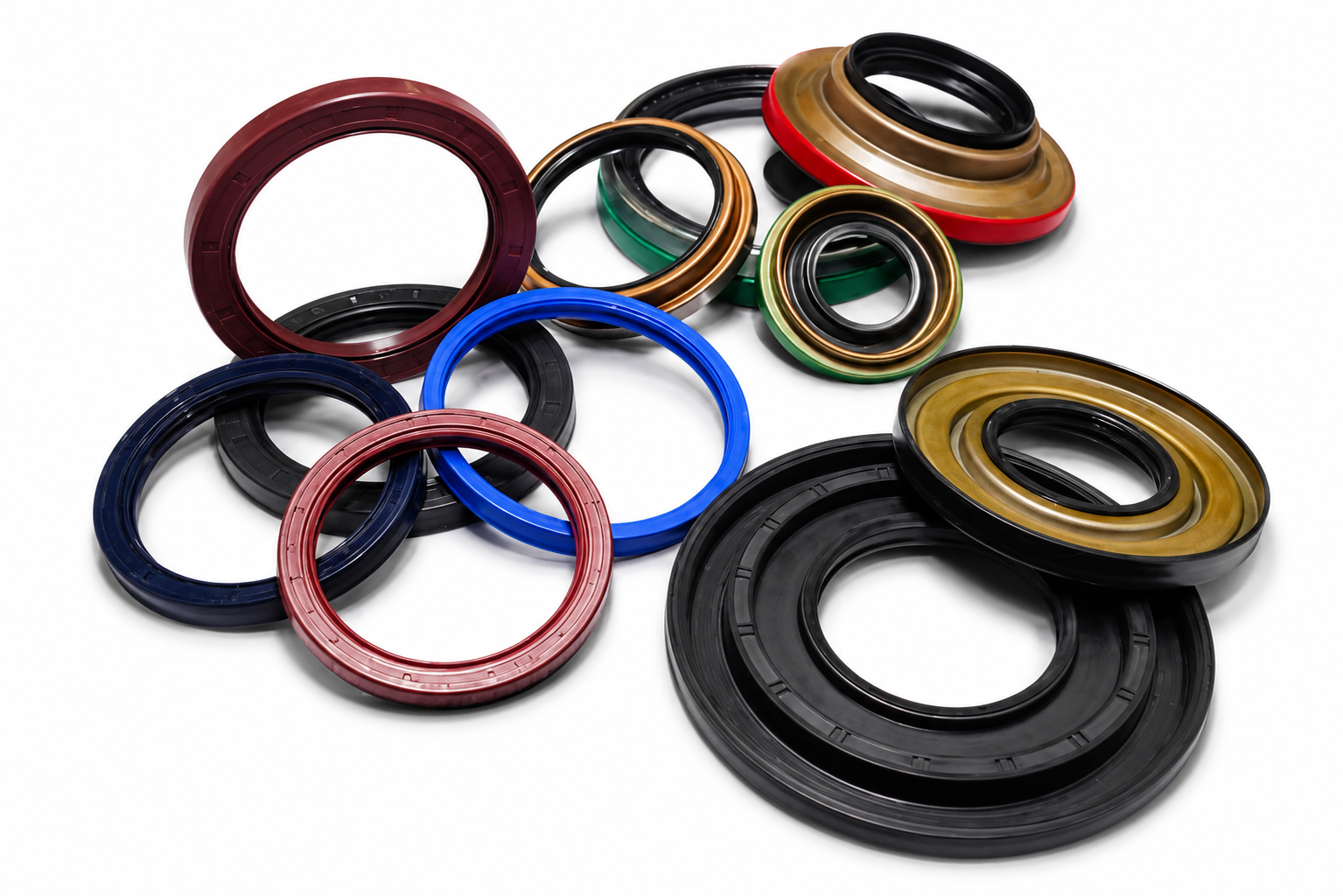
- Not suited to high-speed rotating shafts — that's an oil seal's job
The bottom line
When chasing a slow leak, the O-ring is almost always the right starting point. Always match the size AND the compound to the fluid — a 50 fils part can save a multi-thousand dirham repair.
Need o-rings in Dubai?
Send us the size, brand or part number — we'll respond with stock and best price in minutes.