All articles
Hydraulic Seals
Hydraulic Seals — Keeping Pressure Where It Belongs
2 March 20256 min read
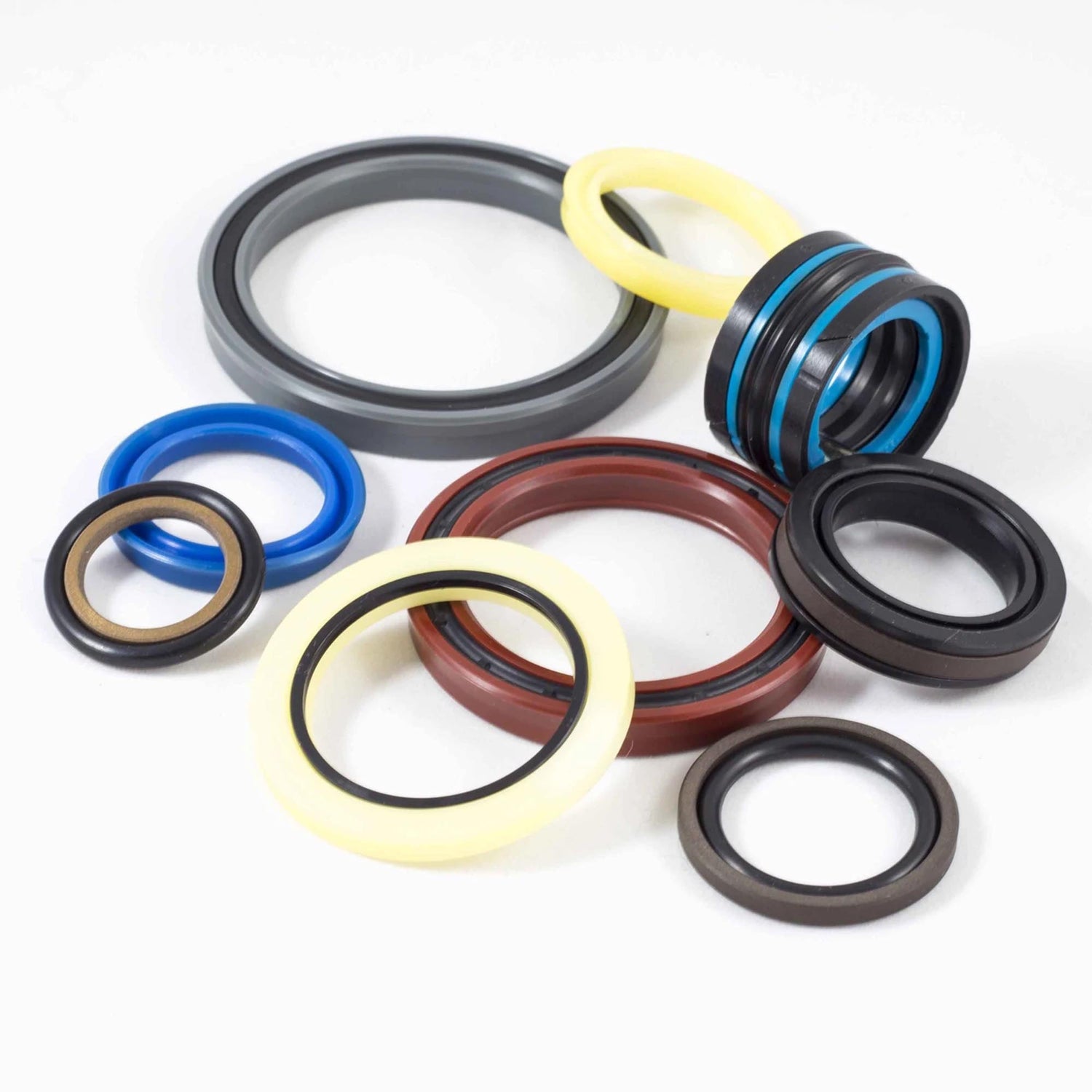
Hydraulic cylinders generate massive force from a small footprint — but only if the seals inside them hold pressure. A worn rod or piston seal turns a 200-bar cylinder into a slow, leaky liability.
Common uses
- 1Boom, bucket and steering cylinders on excavators, loaders and backhoes
- 2Tipper cylinders on dump trucks and waste vehicles
- 3Hydraulic jacks, lifting tables and workshop presses
- 4Industrial cylinders in injection moulding, baling and metal-forming machines
Advantages
- Engineered to hold very high pressures (often 200–400 bar continuous)
- Wiper seals actively scrape dirt off the rod before it enters the cylinder
- Polyurethane and PTFE options resist abrasion and high temperatures
- Available as full seal kits — one box rebuilds a cylinder completely
Disadvantages
- Failure is often sudden — a torn seal can dump the load in seconds
- Installation requires care: a sharp port edge will cut the seal on assembly
- Contaminated oil (water, dust, metal) destroys seals faster than anything else
- PTFE-based seals can be expensive and harder to source for older equipment
The bottom line
Always rebuild a cylinder with a complete seal kit, not just the one part that's leaking. And fix the source of any contamination — clean oil is the cheapest seal-life extender there is.
Need hydraulic seals in Dubai?
Send us the size, brand or part number — we'll respond with stock and best price in minutes.