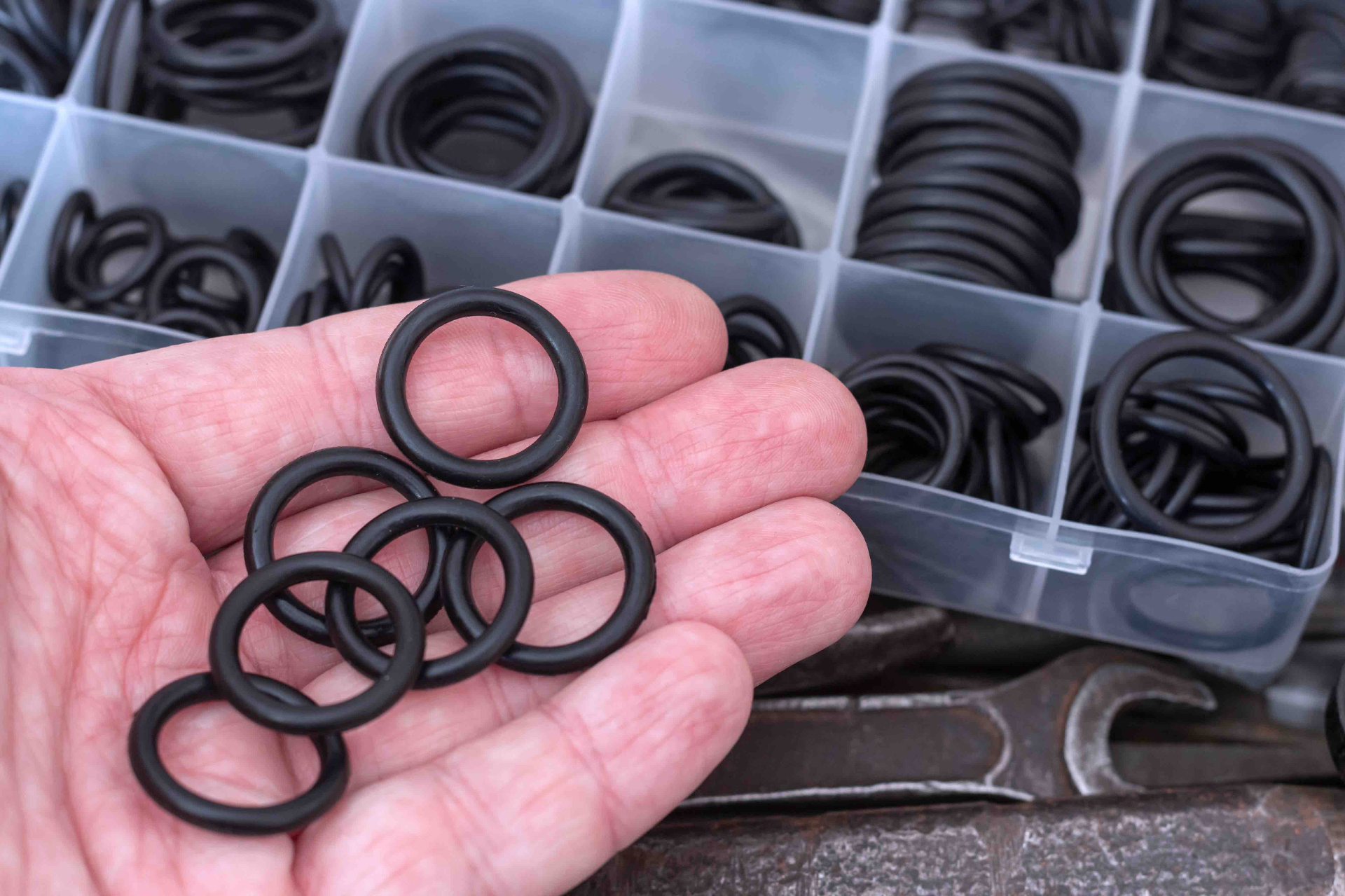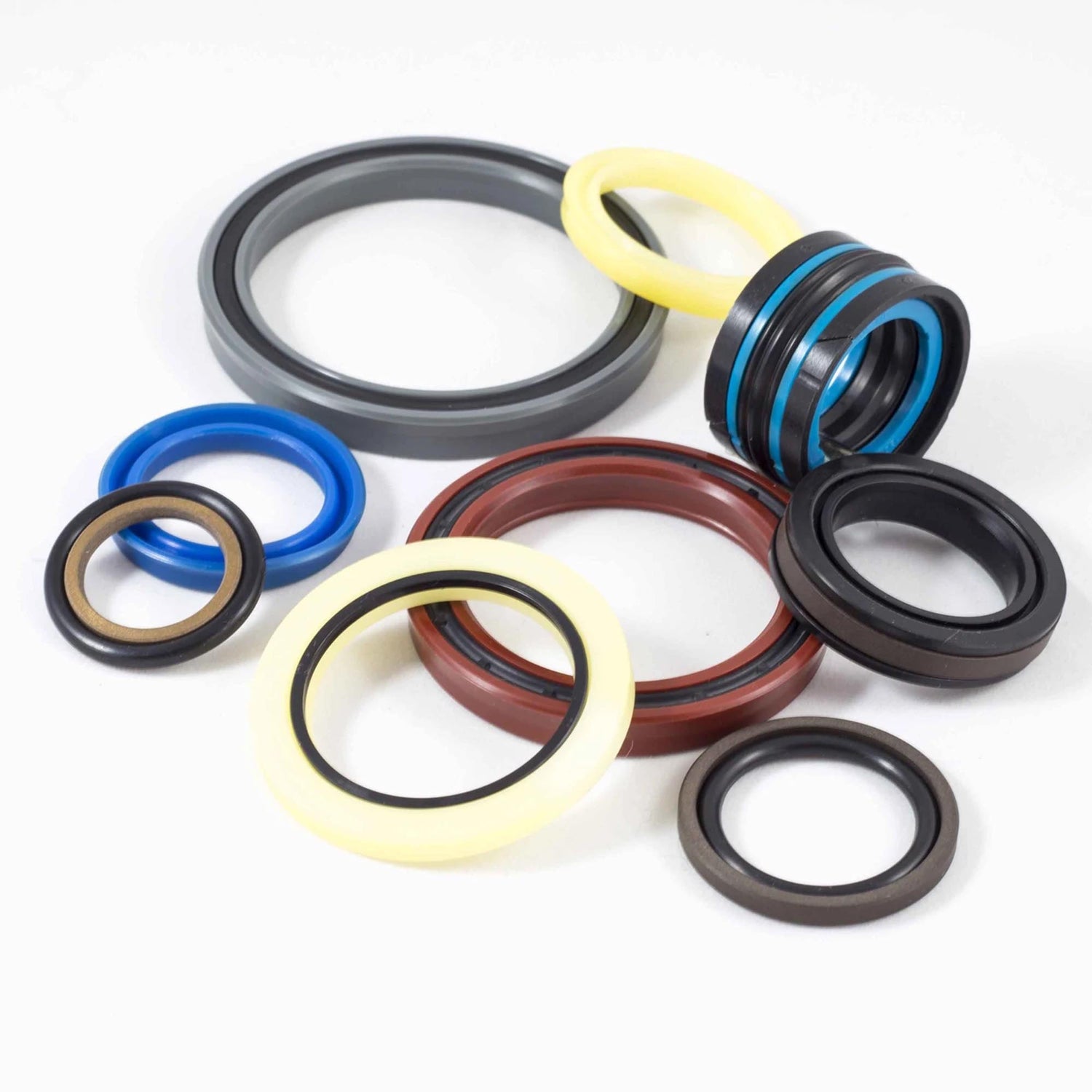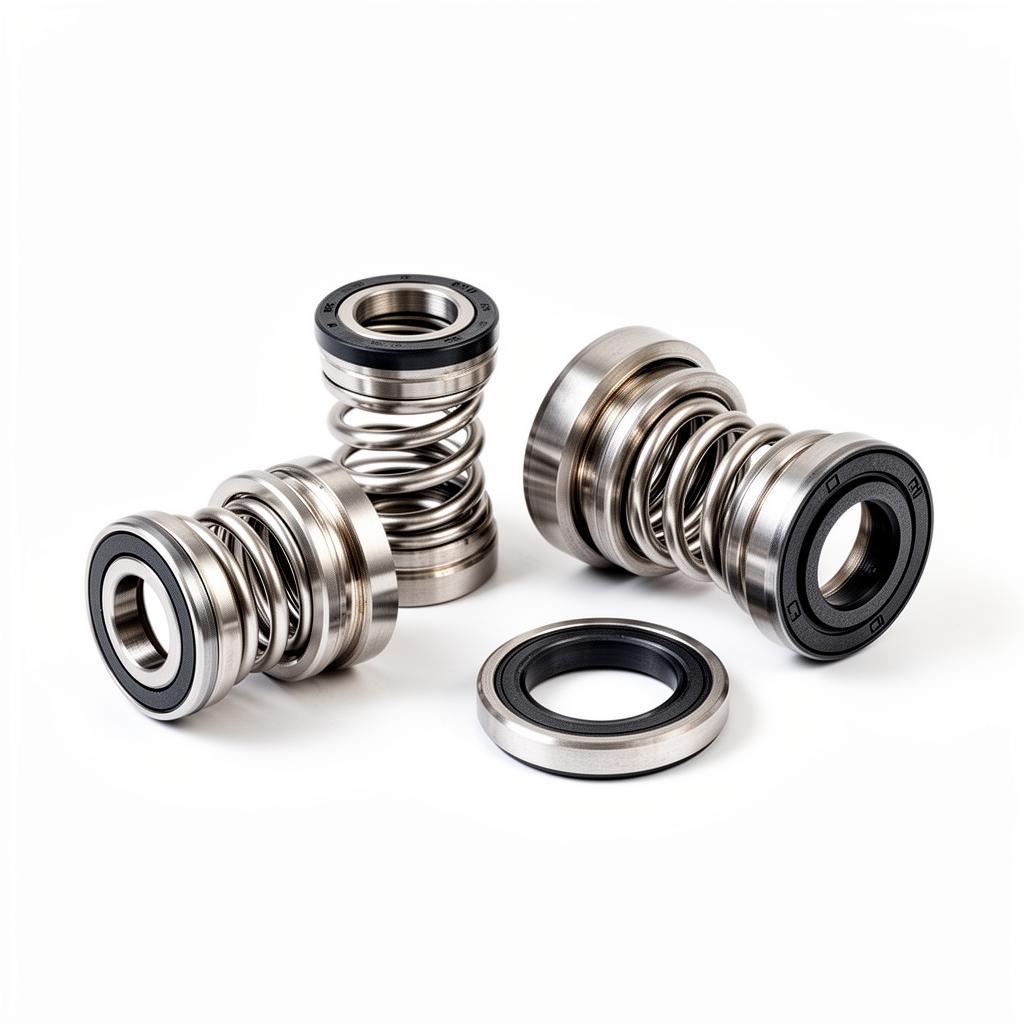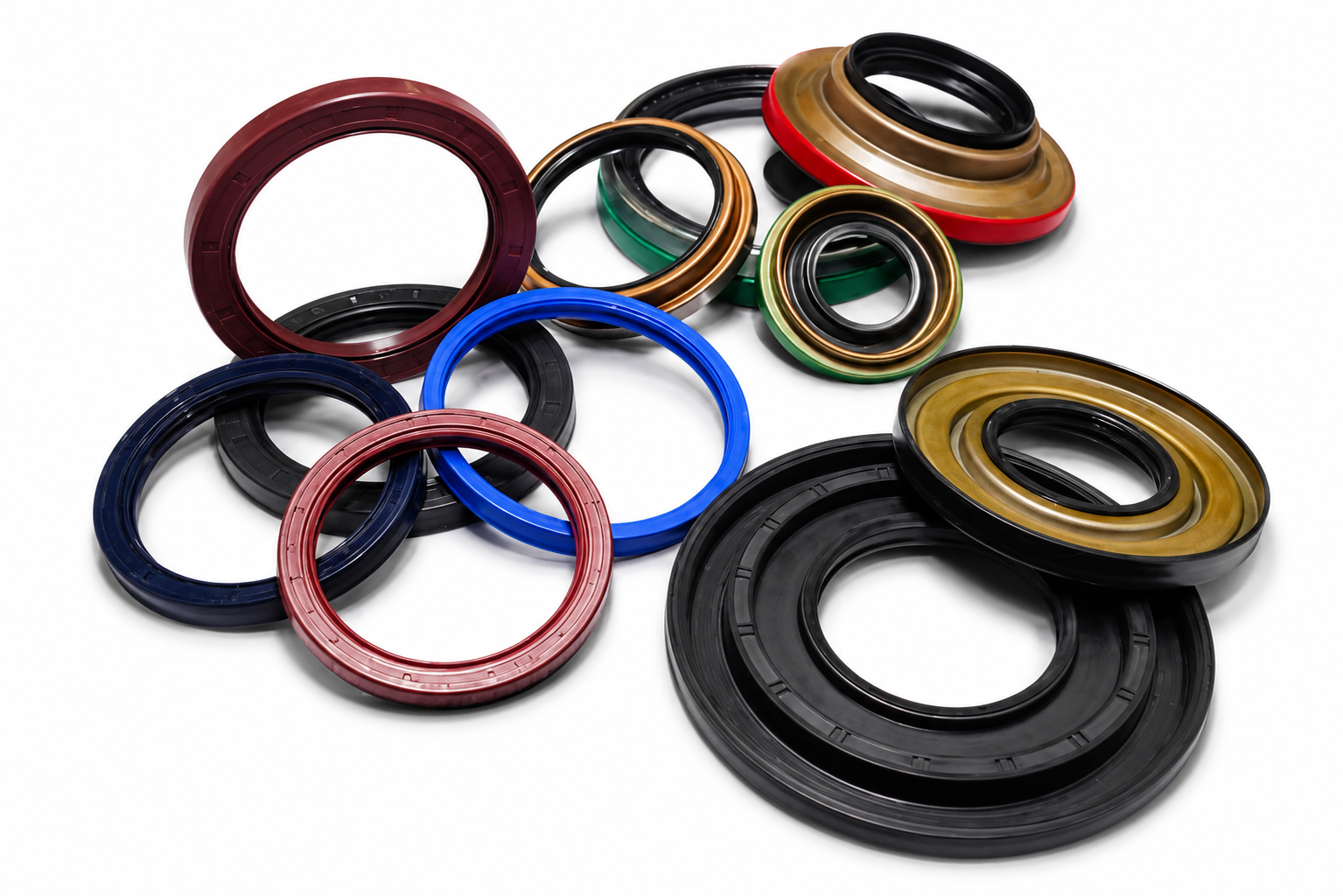
Oil seals — also called rotary shaft seals — sit where a rotating shaft exits a housing. Their job is simple but critical: keep lubricant in and contaminants out. A failed oil seal is one of the most common causes of leaks in cars and industrial equipment.
Common uses
- 1Sealing crankshafts, camshafts and gearbox input/output shafts in engines
- 2Protecting wheel bearings, axles and differentials from dust and water
- 3Used inside hydraulic motors, pumps and electric motor housings
- 4Sealing rotating shafts in industrial gearboxes and conveyor systems
Advantages
- Compact, low-cost and easy to replace during routine service
- Available in NBR, Viton (FKM) and silicone for different temperatures and fluids
- Spring-loaded lip maintains a tight seal even as the shaft wears slightly
- Wide range of standard sizes — most are off-the-shelf items
Disadvantages
- Wear out over time — heat, contamination and shaft scoring shorten life
- Sensitive to incorrect installation; a nicked lip leaks immediately
- Standard NBR seals degrade quickly with synthetic oils or high heat
- Shaft surface finish and runout must be within spec or the seal fails early
The bottom line
If you spot oil on the bell housing, axle or pump body, the oil seal is usually the cheapest part of the repair — the labour is the expensive bit. Always replace seals as a set when a gearbox or axle is opened up.
Need oil seals in Dubai?
Send us the size, brand or part number — we'll respond with stock and best price in minutes.